
978.741.1200
Medical and Surgical CarePatients and Visitors InfoClasses at NSMCWellness at NSMCNSMC - About UsHealth LibraryFind a Doctor
Vascular Center
Make an appointment


  • 877.676.2637

NSMC's Vascular Program offers the North Shore’s only comprehensive treatment integrating our expertise in interventional cardiology, interventional radiology and vascular surgery.

We offer elective and emergency angioplasty and cardiovascular surgery. We are also the first to perform minimally invasive abdominal aortic aneurysm repair using stent grafts – a complex procedure used to treat life-threatening vascular disease.


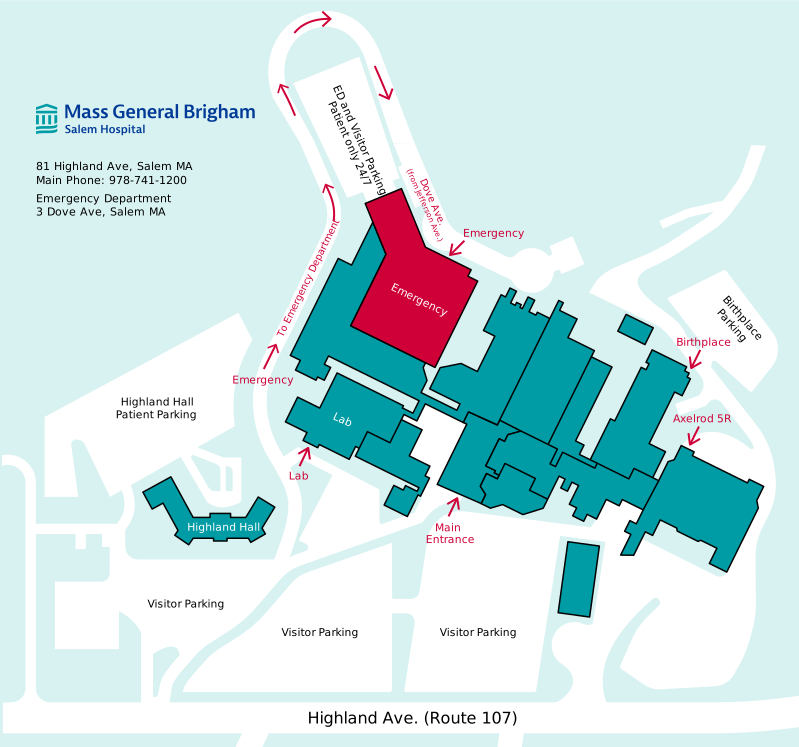
Services are provided both at NSMC Salem Hospital and NSMC Union Hospital in state-of-the-art interventional and surgical suites as well as through affiliated physician offices.


Possible interventions:

Angioplasty (elective and emergency)
In this procedure, your doctors insert a balloon-tipped, long, thin tube (catheter) into the blocked or narrowed part of your artery. The balloon is inflated, compressing the plaques that are blocking your artery against the artery walls. A mesh tube (stent) may be left in the artery to help keep the artery open and improve circulation more permanently. This procedure usually requires only a one-day stay in the hospital.

Endovascular abdominal aortic aneurysm repair
This procedure is used to treat the dangerous dilation of the large artery in your abdomen. Potentially fatal, this condition can be treated, depending on your particular case, using open or minimally invasive surgical techniques. During the procedure, surgeons replace the weakened part of your aorta with a tube-like replacement called an aortic graft. This graft is made of strong man-made material, such as plastic, in the size and shape of the healthy aorta. The strong tube takes the place of the weakened section in your aorta and allows your blood to pass easily through it.

Carotid artery stenting
The carotid arteries, which supply blood to the brain, can develop atherosclerosis, the build-up of fat and cholesterol deposits called plaque. This is a serious condition because clots can form on the plaque and block blood flow to your brain, causing a stroke or other damage. Carotid artery stenting is now being performed through the NSMC Vascular Program. An interventional cardiologist inserts a slender, metal-mesh tube, called a stent, which expands inside your carotid artery to increase blood flow in areas blocked by plaque. To prevent hardening of the arteries from occurring again, we also recommend eating more foods low in saturated fat, cholesterol, and calories; exercising regularly, especially aerobic exercises such as walking; maintaining your ideal body weight; quitting smoking; and following your physician’s recommendations for medications to control cholesterol or to thin the blood.

Thrombolytic therapy
If you have an artery that is blocked by a blood clot, your doctor may insert a clot-dissolving drug into your artery at the point of the clot to break it up. These interventions usually require angiography – a procedure in which a small catheter is inserted into your arteries and filled with dye, enabling doctors to see narrow spots and blockages with the help of X-rays. Most patients who have this procedure do not need to stay overnight in the hospital and require no special rehabilitation program.

Vascular surgery
For certain conditions, your doctors may create a vascular bypass using a vessel from another part of your body or a tube made of synthetic fabric. This allows blood to flow around a blocked or narrowed artery.

 More about vascular treatment in Health Library

Services

Main Locations